Bigoli – Hand Rolled Thick Spaghetti Pasta (Istrian Recipe)
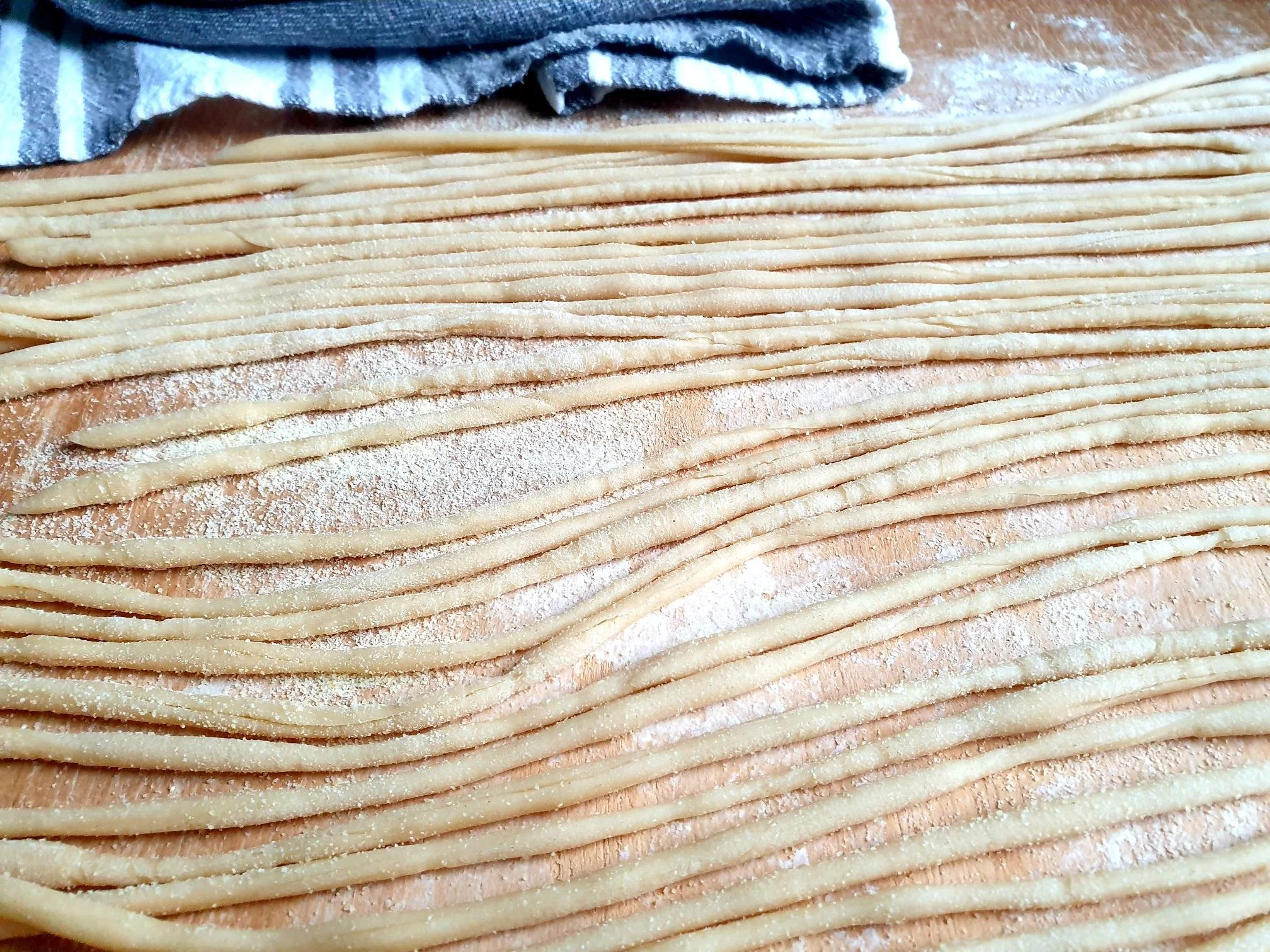
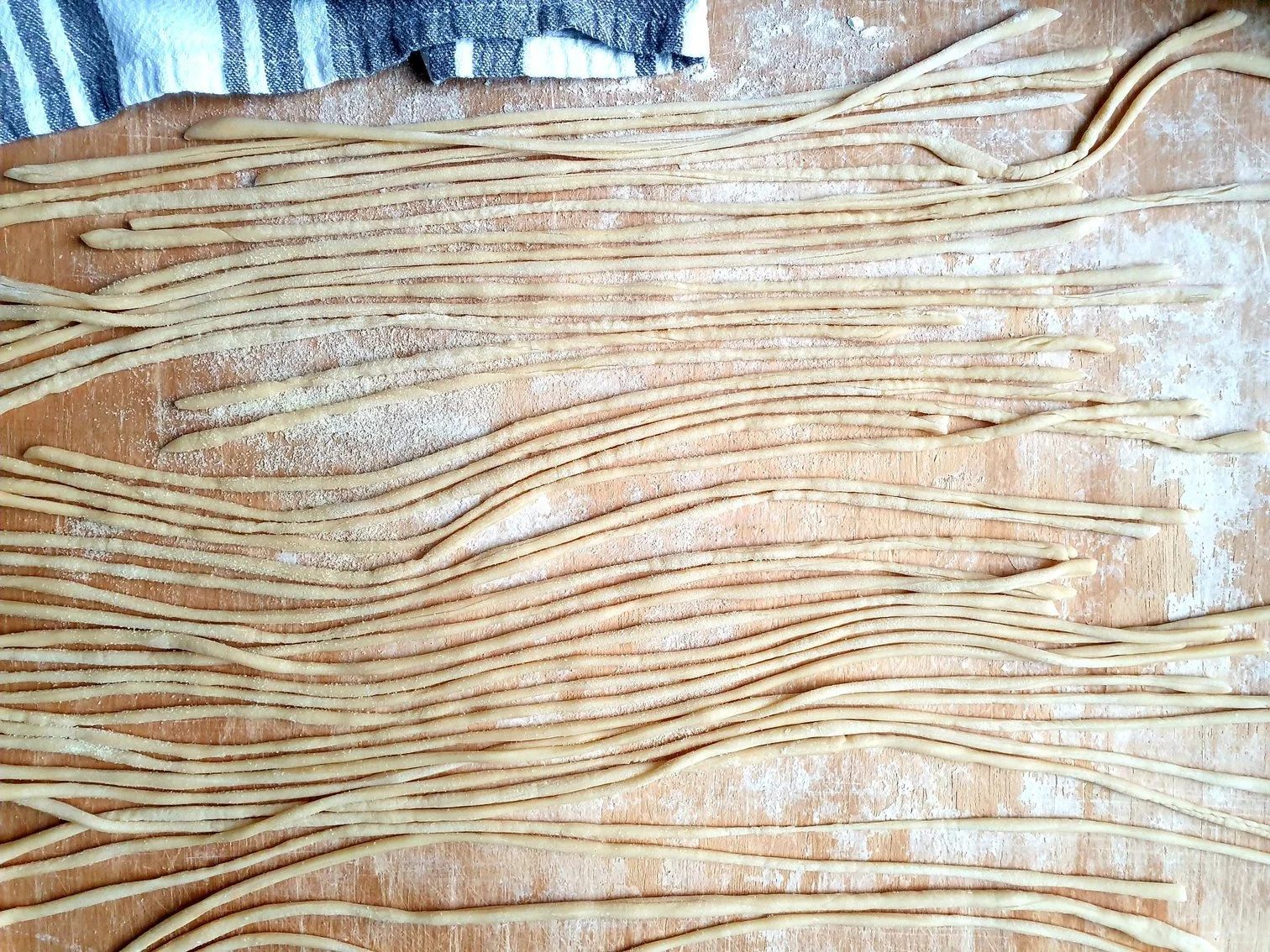
Bigoli is a traditional type of pasta originating from the Veneto region of Northern Italy. It is long and thick with a rustic appearance resembling coarse spaghetti.
This simple pasta represents real homemade rustic cooking.
If you have never made fresh pasta before, this is a great beginner shape, it is great fun to make and feels like child's play. It is like shaping Play-Dough strands into worms.
This speciality pasta shape from Veneto dates back to the Venetian Republic. It has a rough and porous texture which helps to catch and hold the sauce beautifully. Bigoli were initially made with buckwheat flour (but now whole-wheat flour is the most common choice), water, and sometimes duck eggs.
A special pasta machine called a bigolaro has been used. A bigolaro is a sort of hand operated cylindrical press in which the pasta dough was placed and forced through the holes producing bigoli pasta.
This type of pasta used to be very popular along the coast of Slovene Istria, as this part of land was once ruled by the Venetian Republic, which strongly influenced and shaped the local food culture.
The dough for the pasta was made with regular plain flour instead of whole wheat, less eggs were used, or none at all, and it was rolled by hand, one by one, like Tuscan pici pasta, without the use of the press.
As this regional pasta is a bit hard to find outside Veneto region, I strongly suggest you try to make it at home, it is definitely cheaper than a trip to Italy.
Recipe
Ingredients
Serves 4
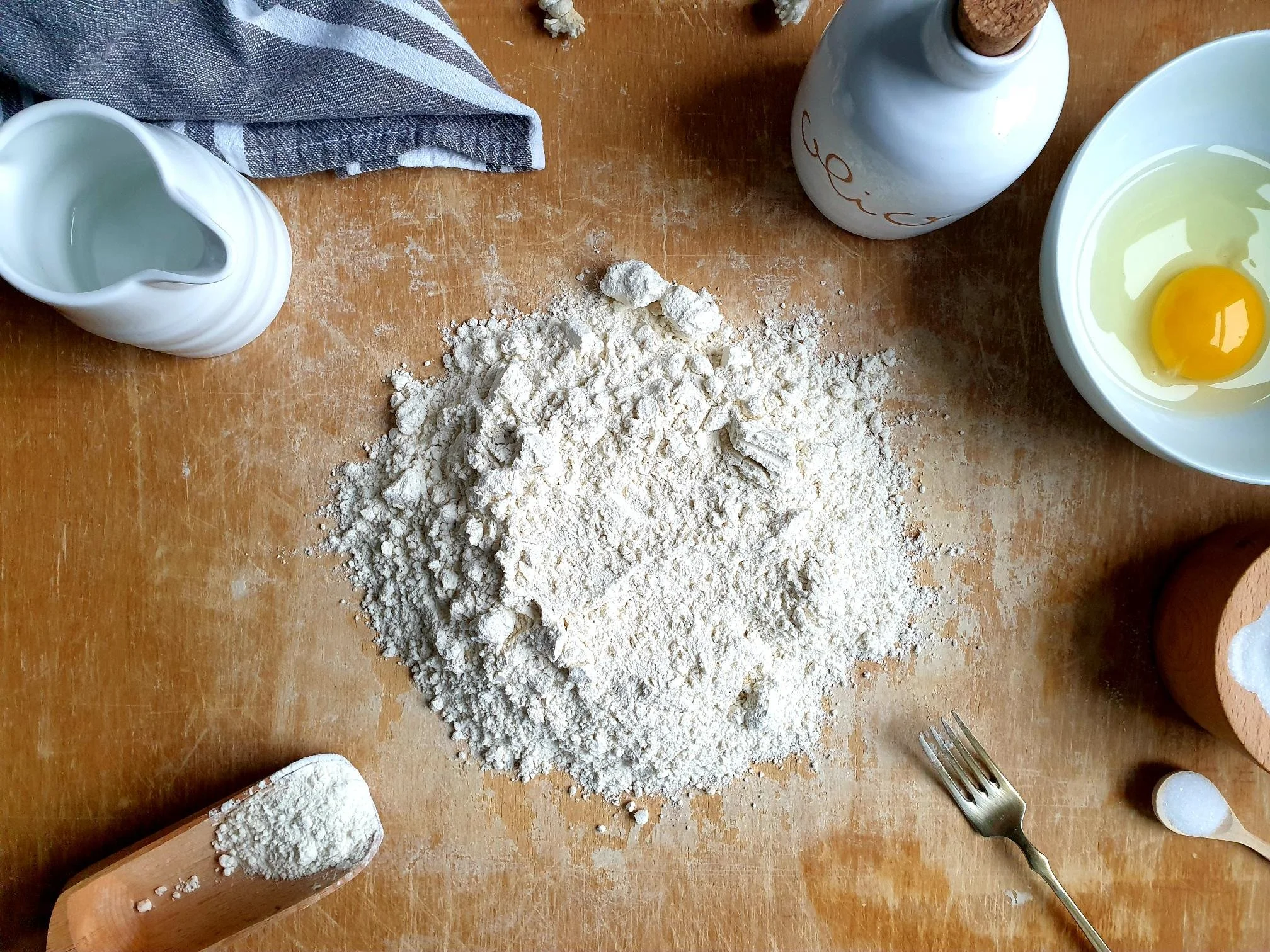
300g plain white (all purpose) flour
1 egg (weigh the cracked egg in a small bowl and add enough lukewarm water to obtain a total weight of 150ml). For example, I used 1 small egg weighing 60g so I added 90ml of water.
lukewarm water, as needed
1 Tsp of olive oil
a pinch of sea salt
semolina, optional
Method
Place the flour in a mixing bowl or form it into a mound directly on a clean working surface or a wooden pasta board (if you have one).
Make a well in the centre of the flour.
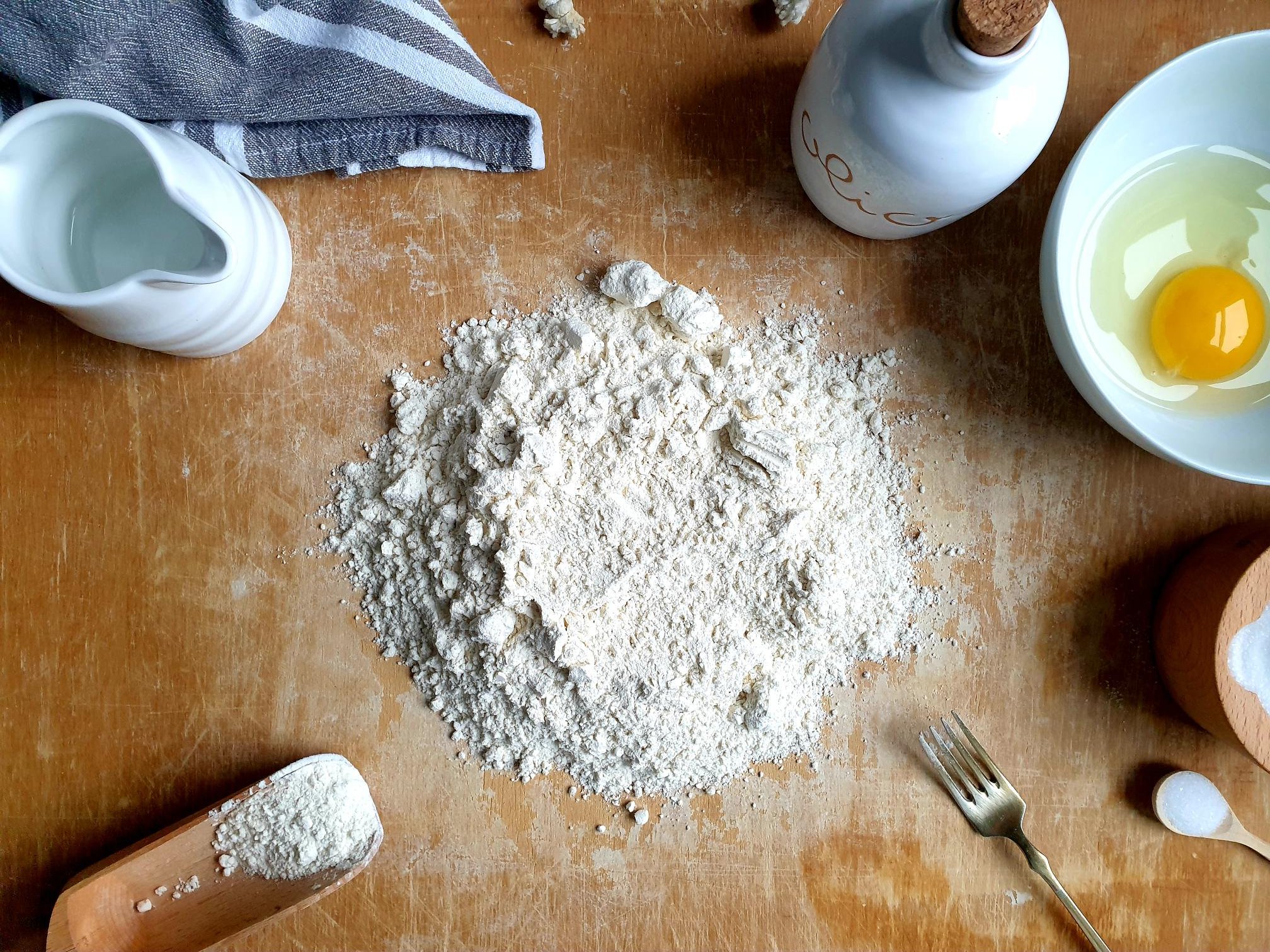
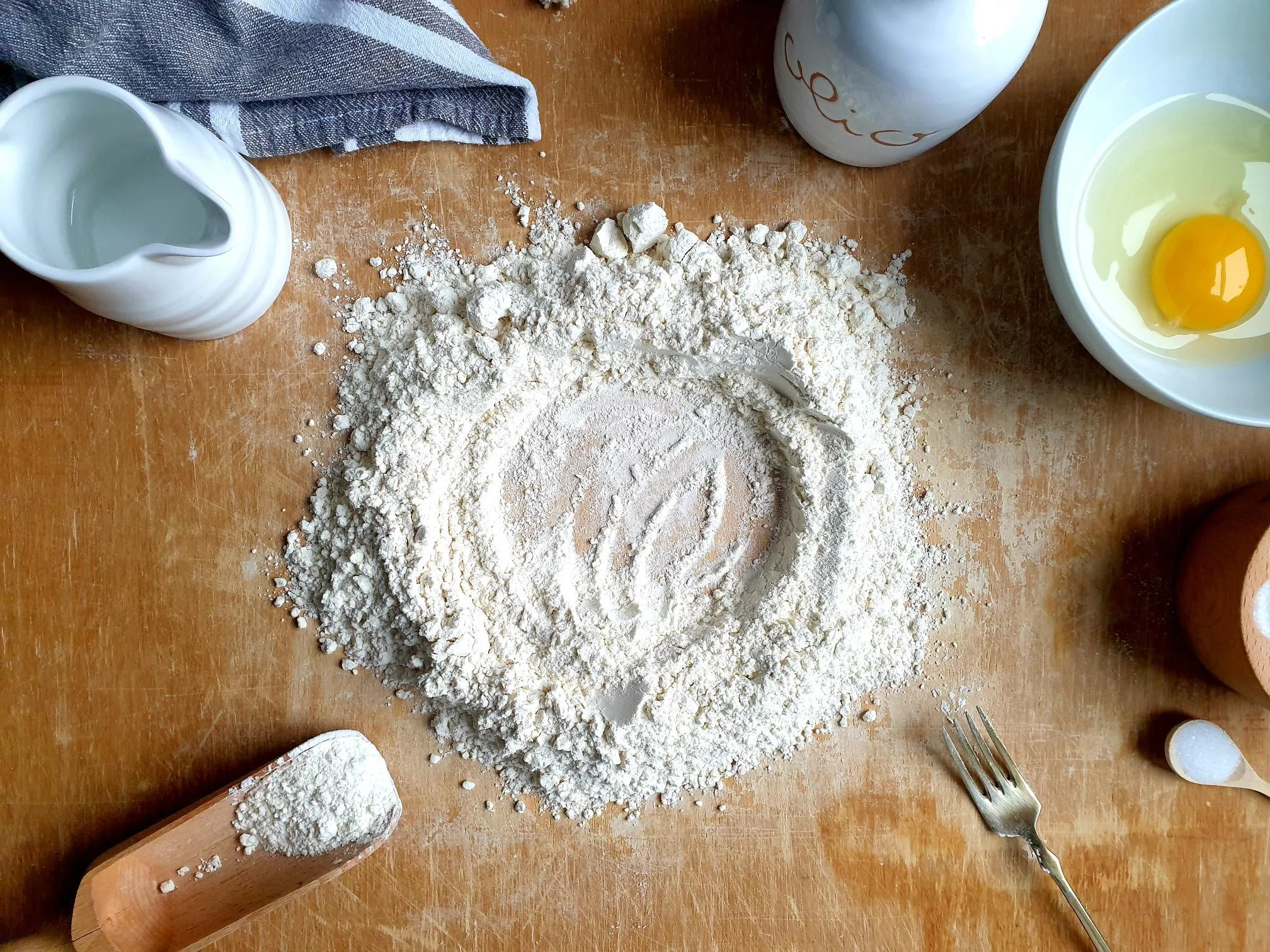
Add sea salt and the mixture of beaten egg and lukewarm water.
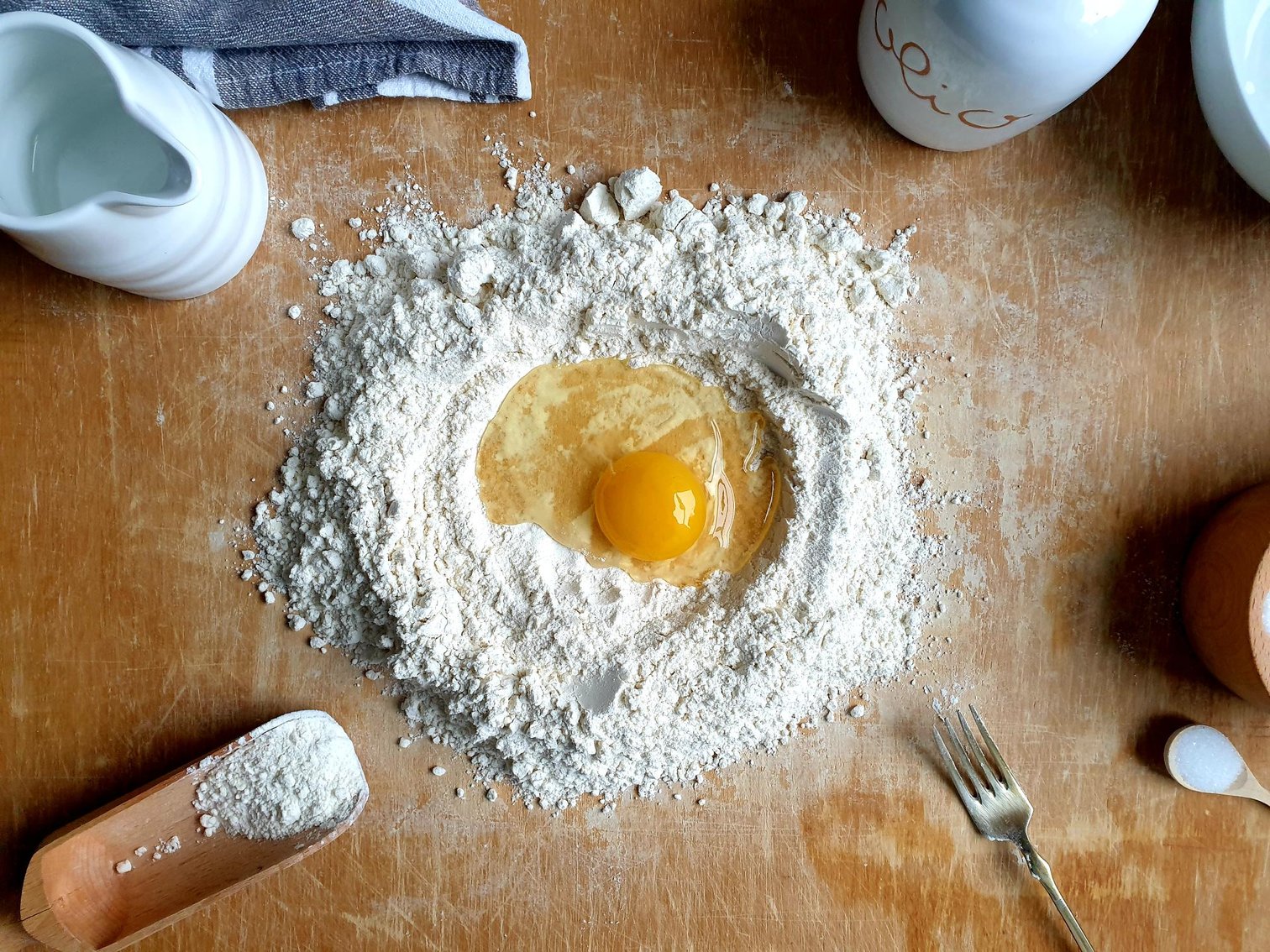
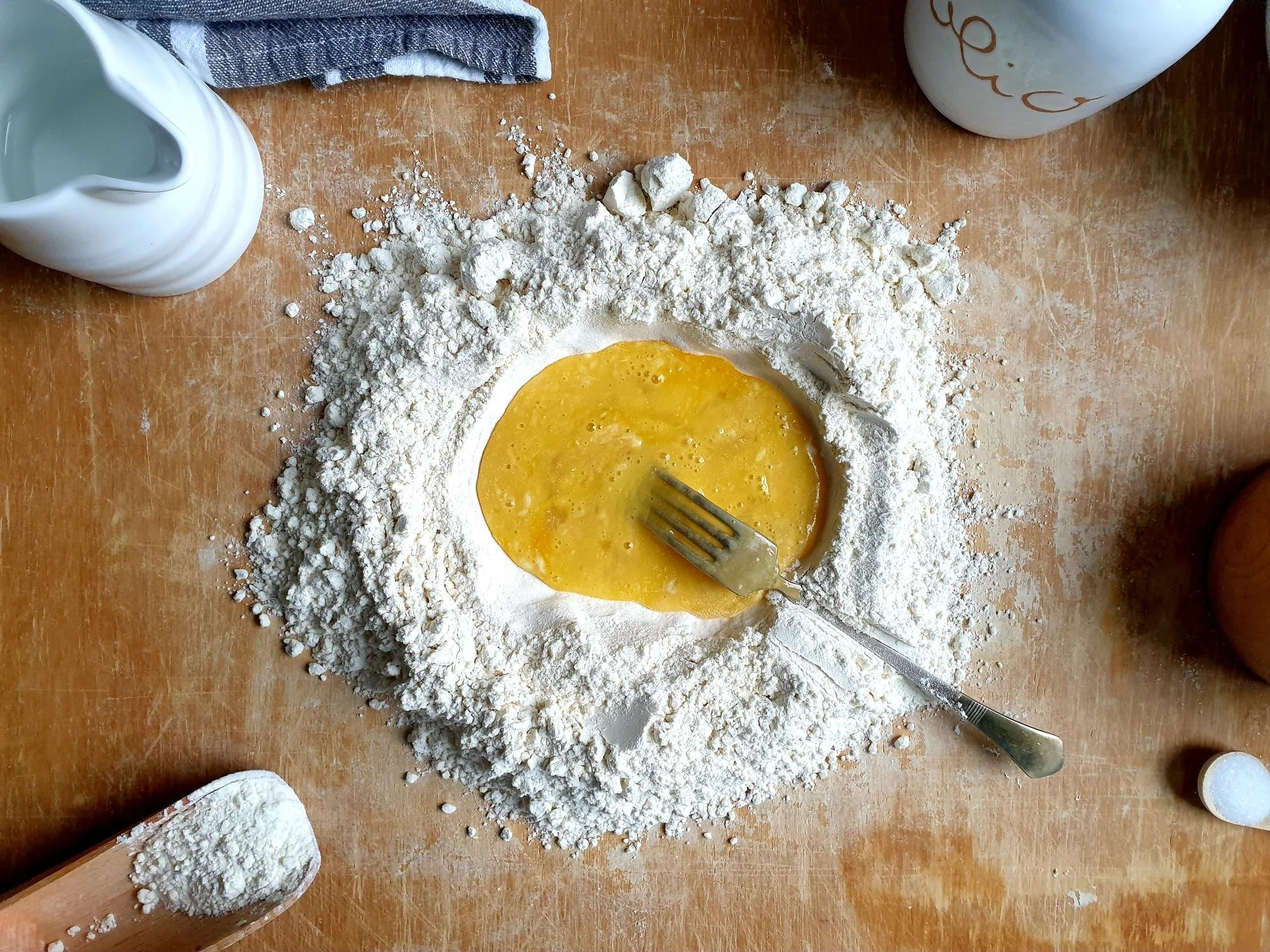
With a fork, start to incorporate the flour from the sides of the well and keep pulling the flour into the egg and water mixture until all the flour has been fully incorporated and all the ingredients are well combined.
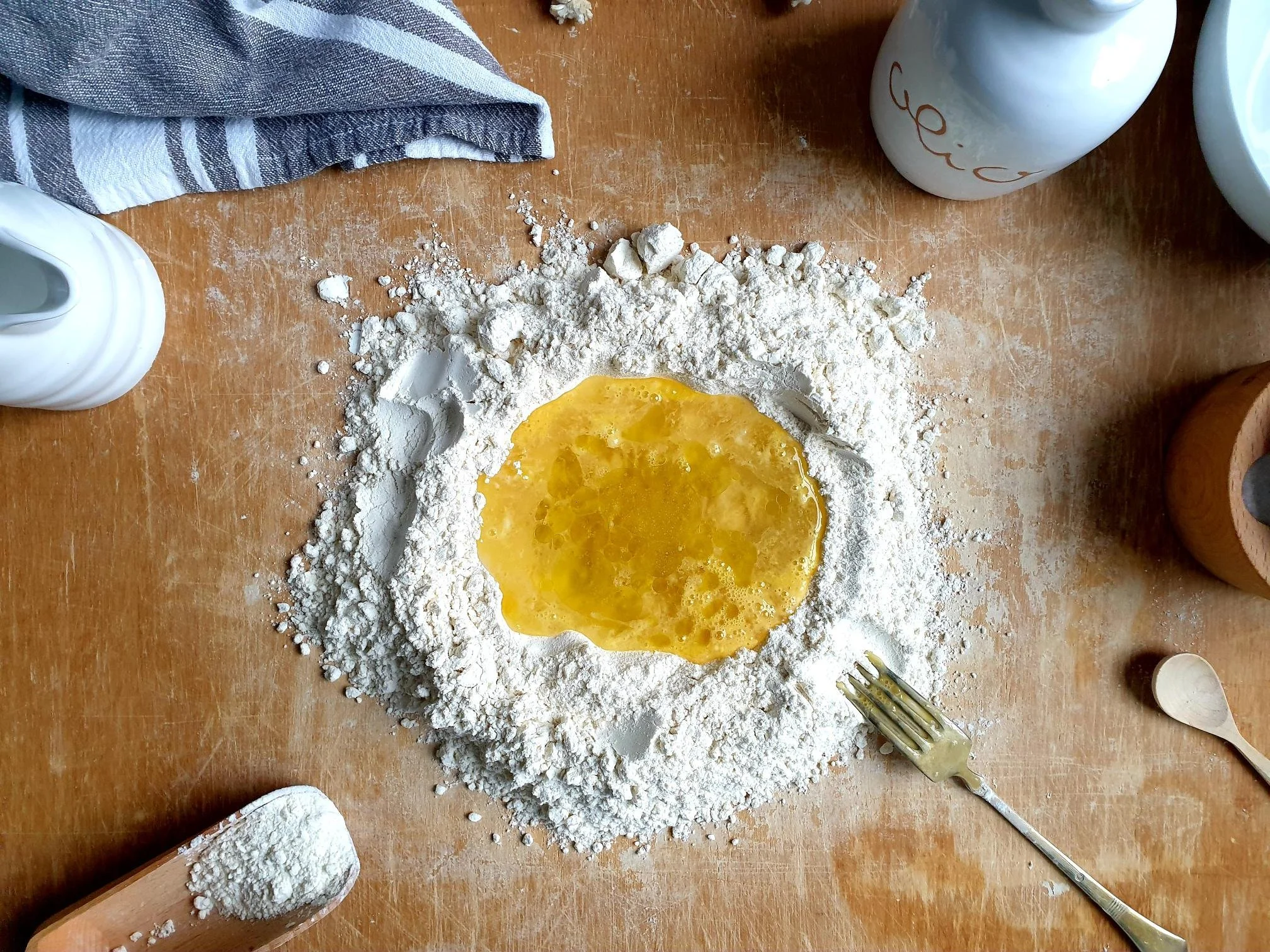
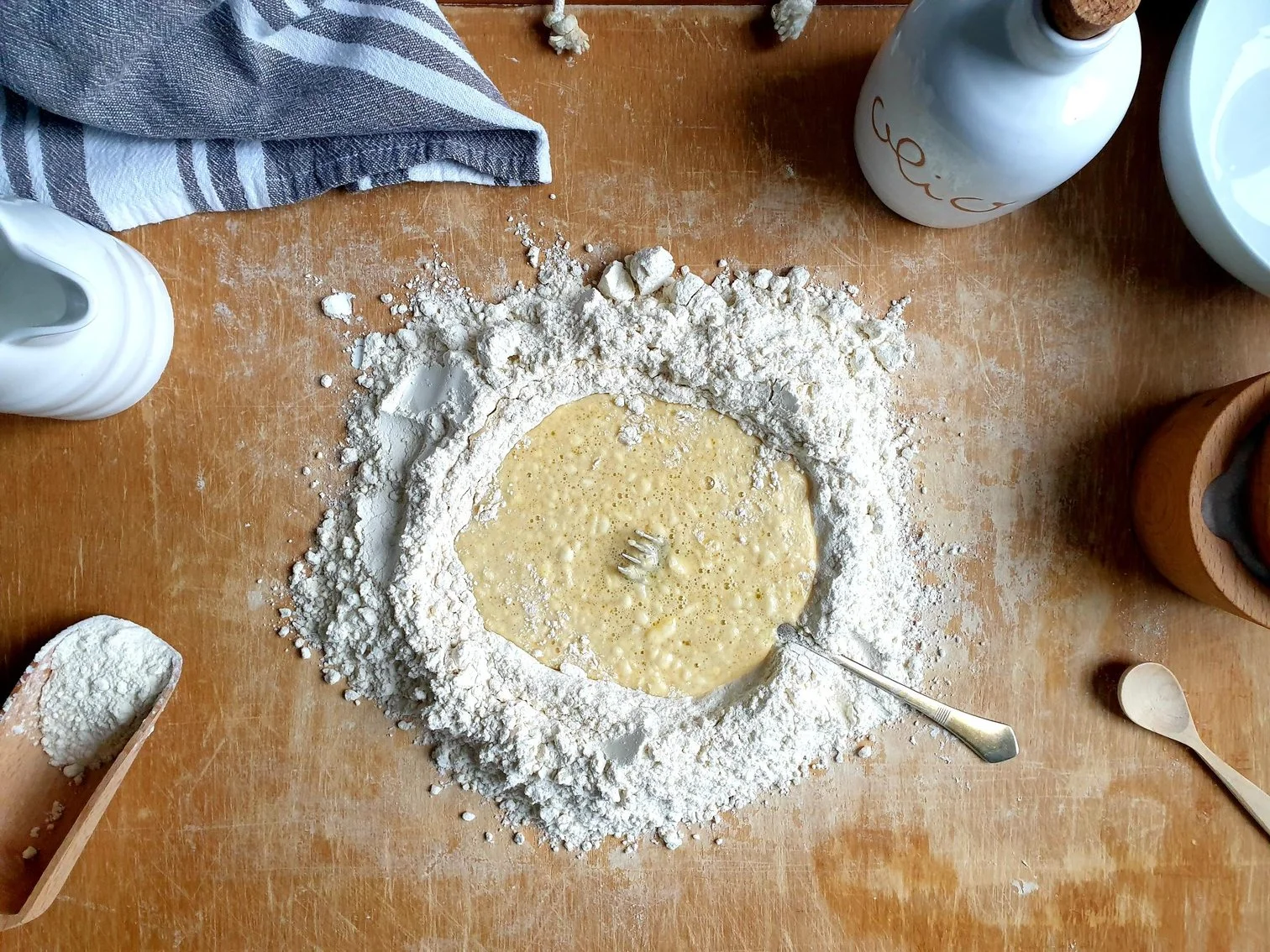
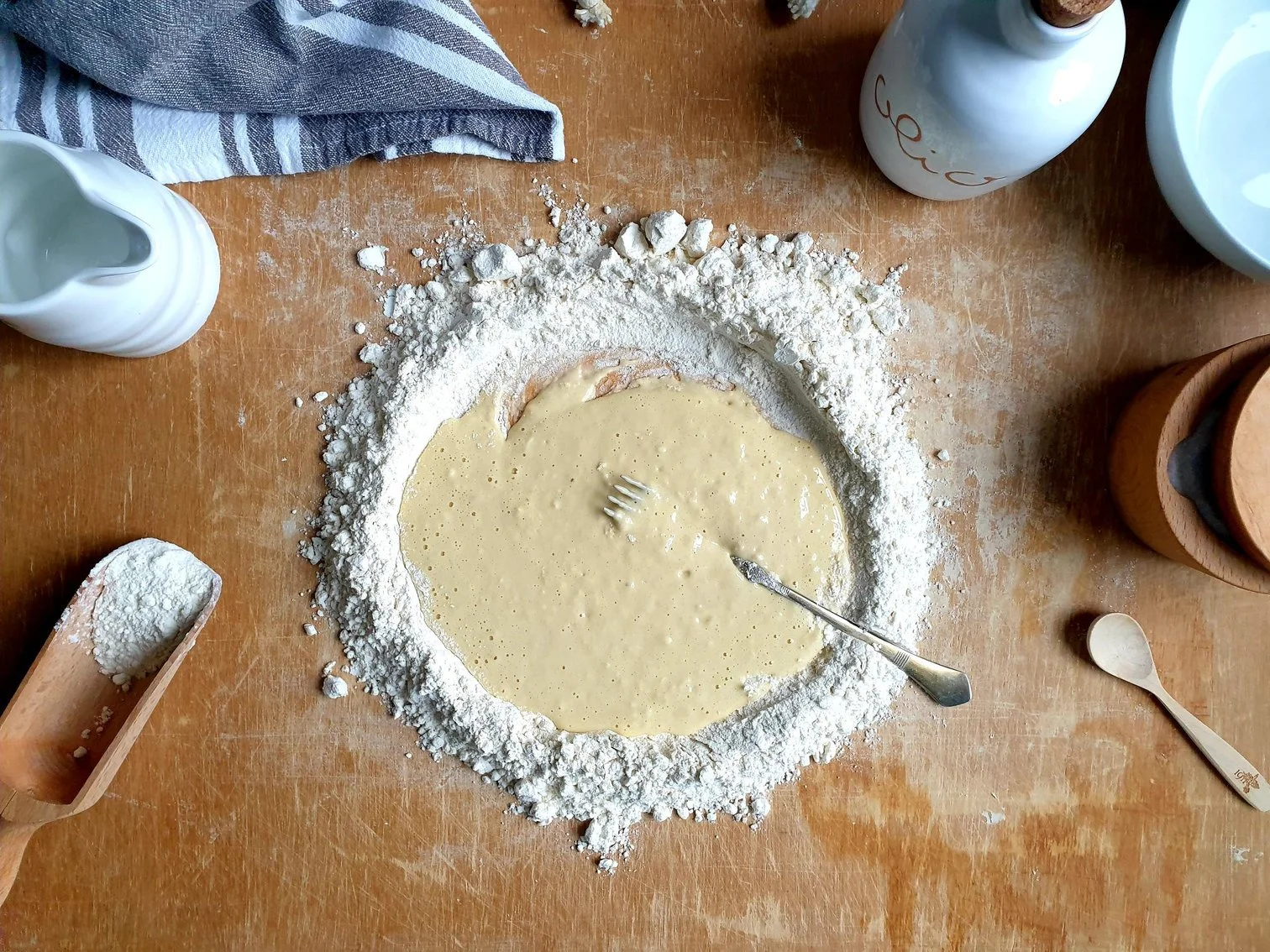
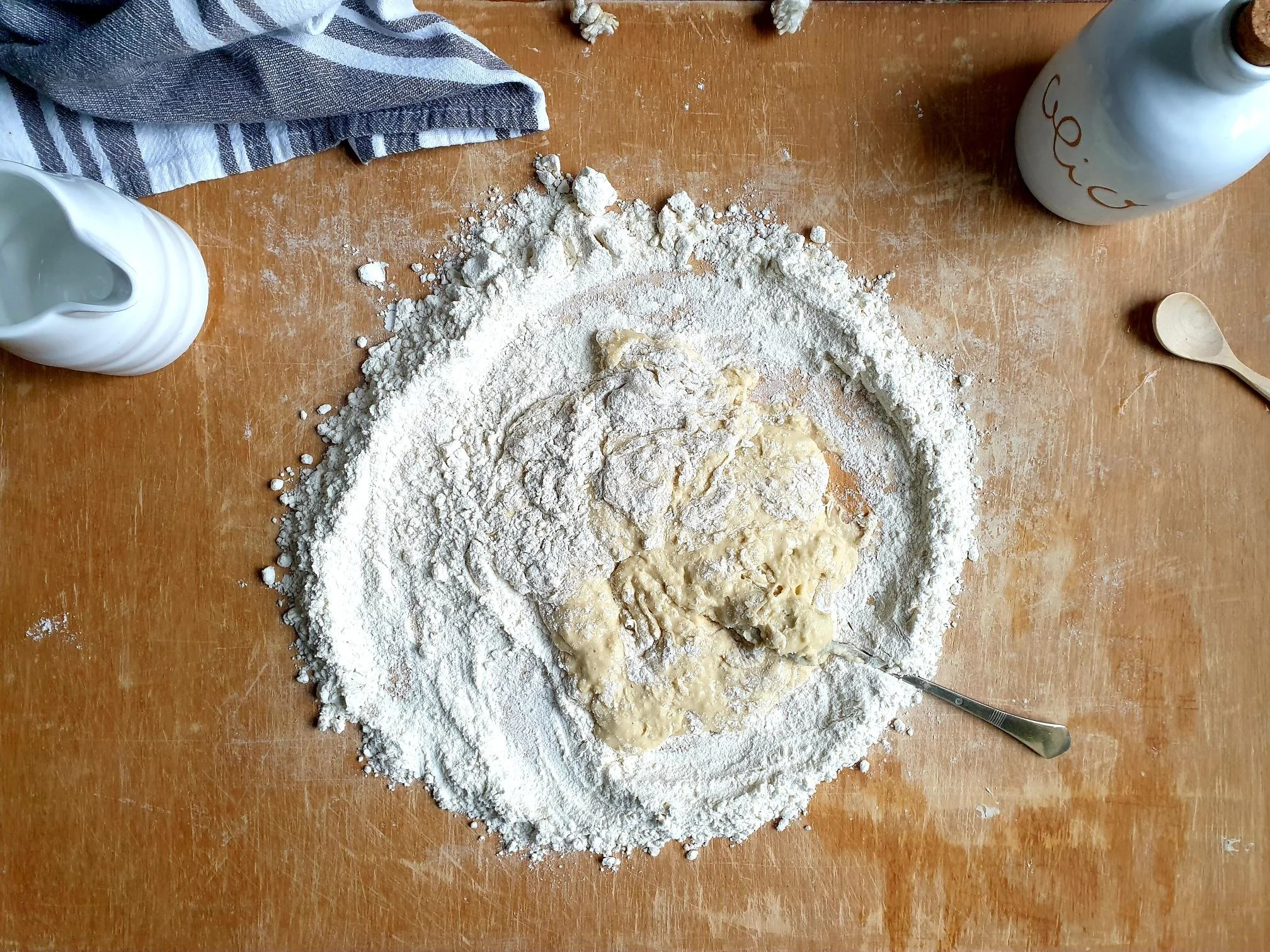
Work the dough by squeezing the mixture in your hands, making it into a ball.
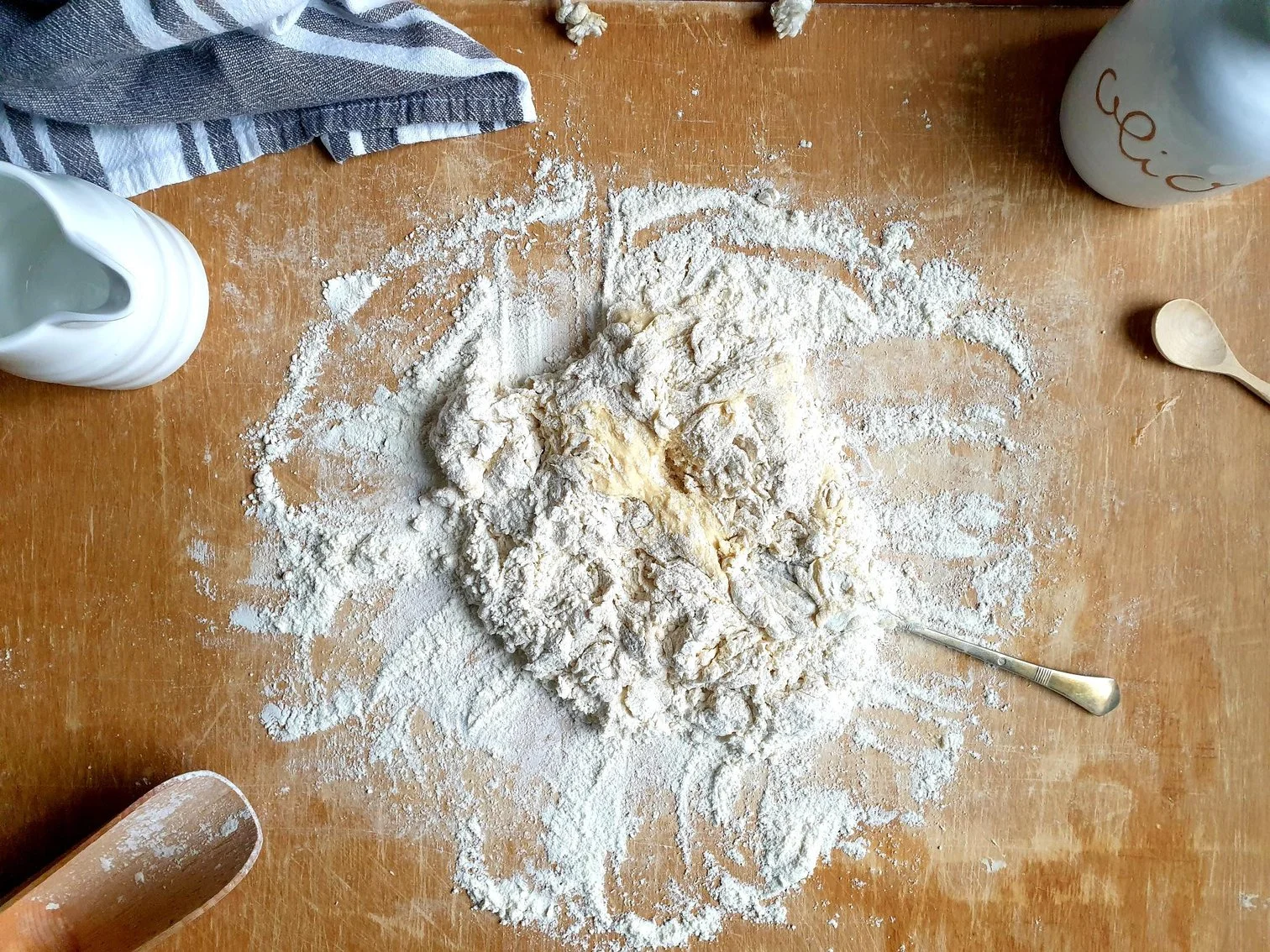
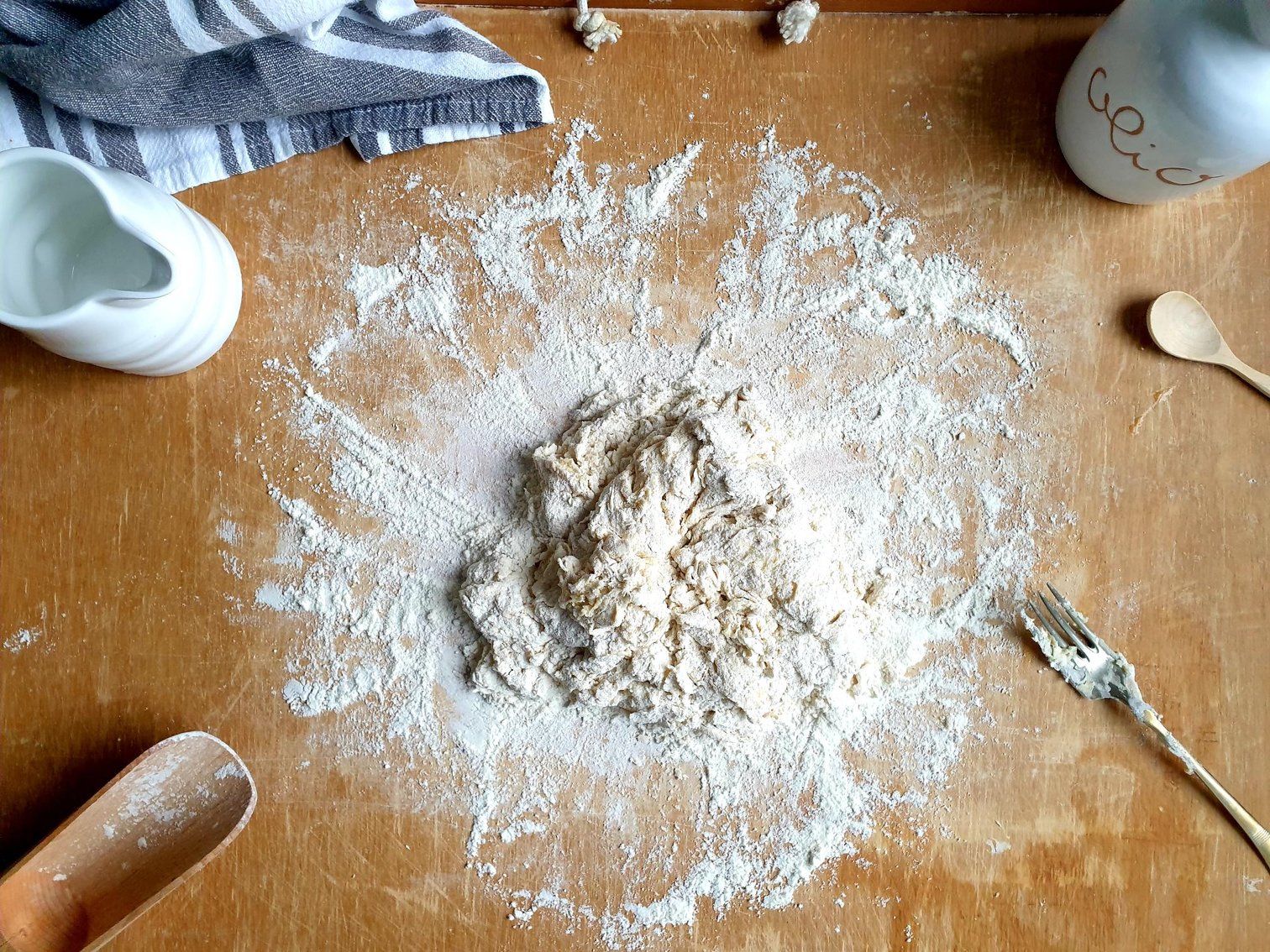
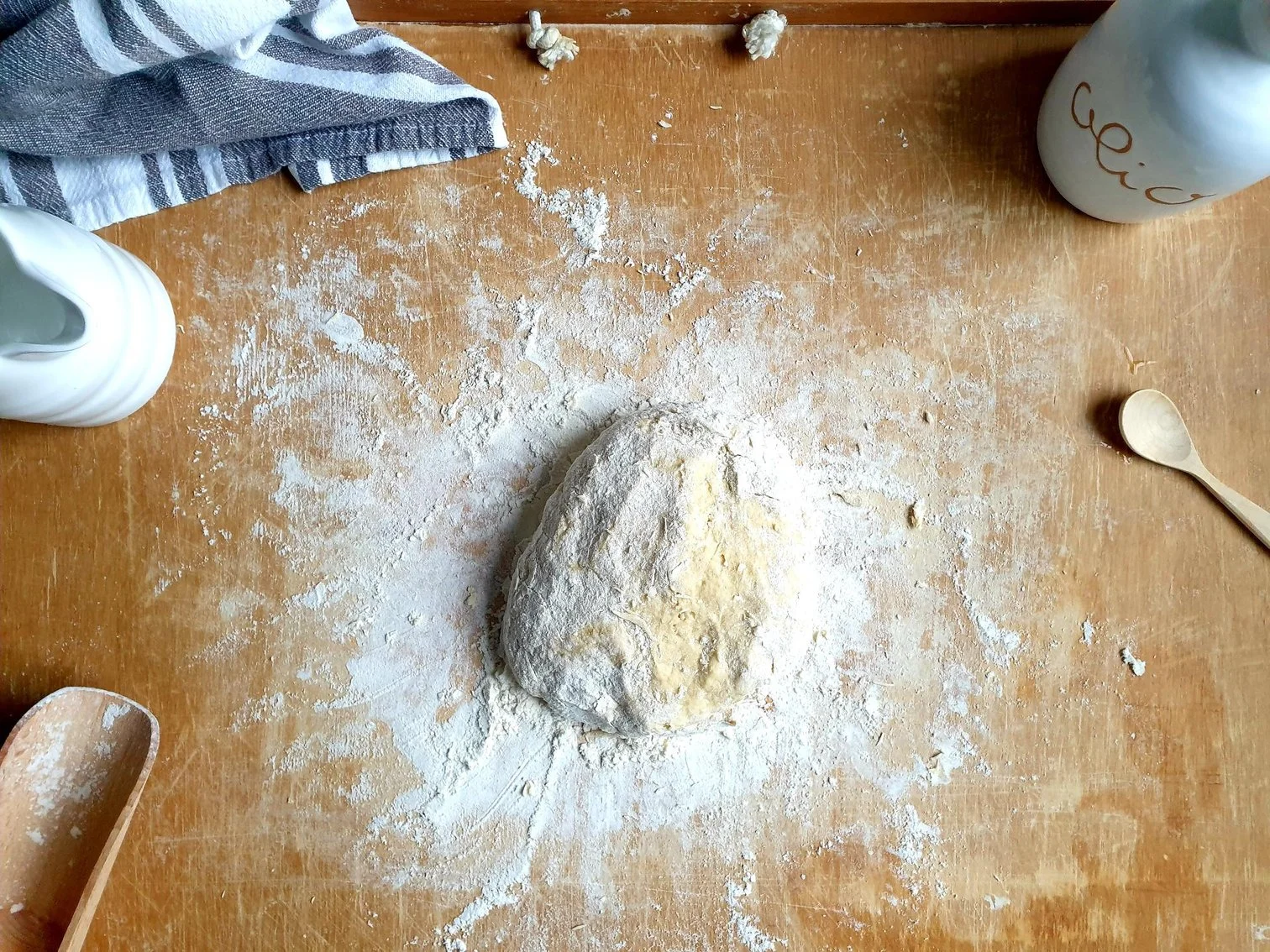
Start gently kneading with both hands (for about 8 minutes) until it becomes compact, elastic, and not sticky.
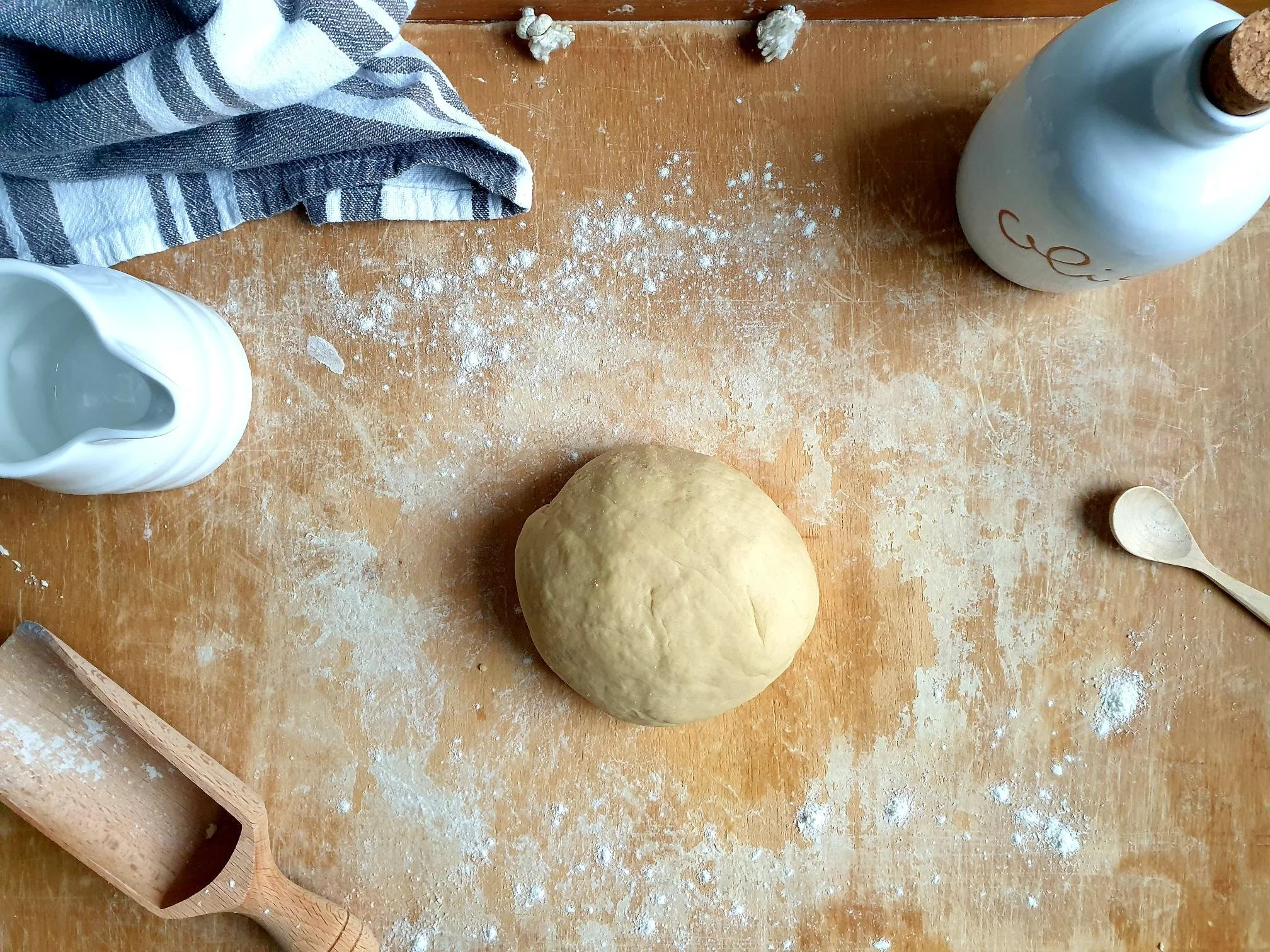
Wrap the dough in cling film, and allow to rest for at least 30 minutes or up to 1-2 hours at room temperature, allowing the gluten to relax.
If you are not using the dough straight away, you can put it into a fridge for up to a day.
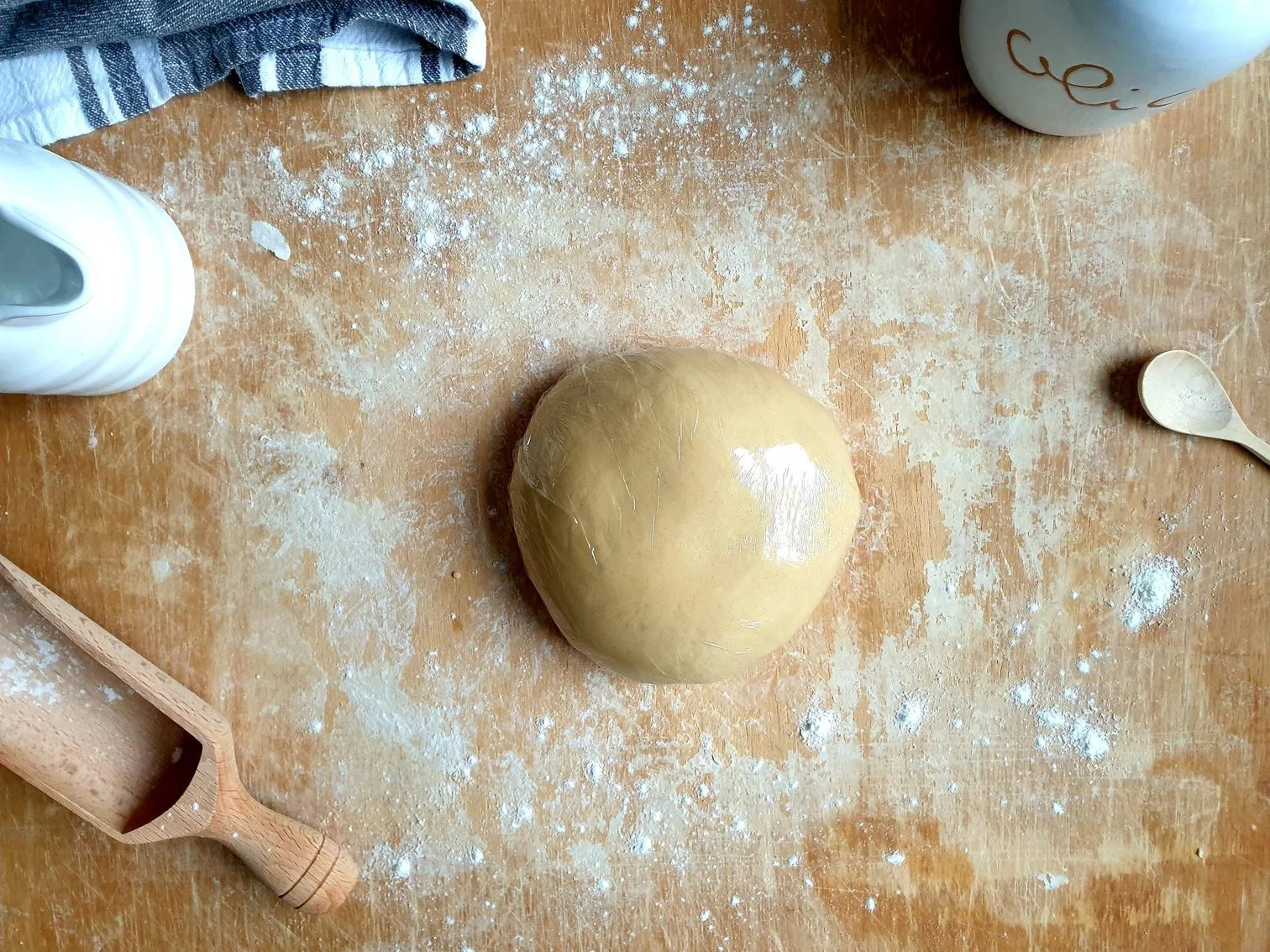
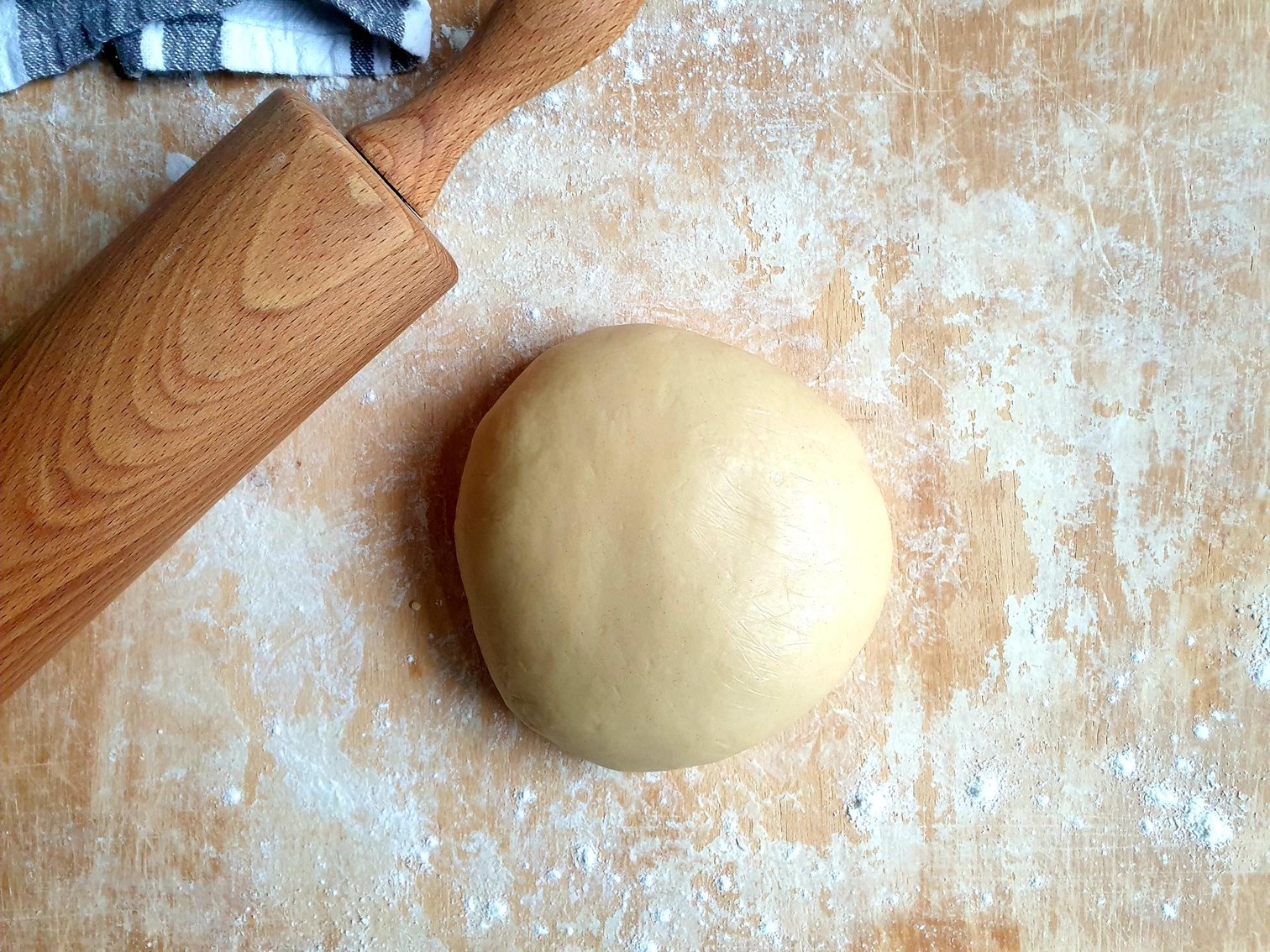
Unwrap the dough and cut it in half. Cover the half of the dough you are not using with a cling film to prevent it from drying.
With a rolling pin, roll the unwrapped half of the dough into a rough rectangle, about 0.5cm (¼ inch) thick.

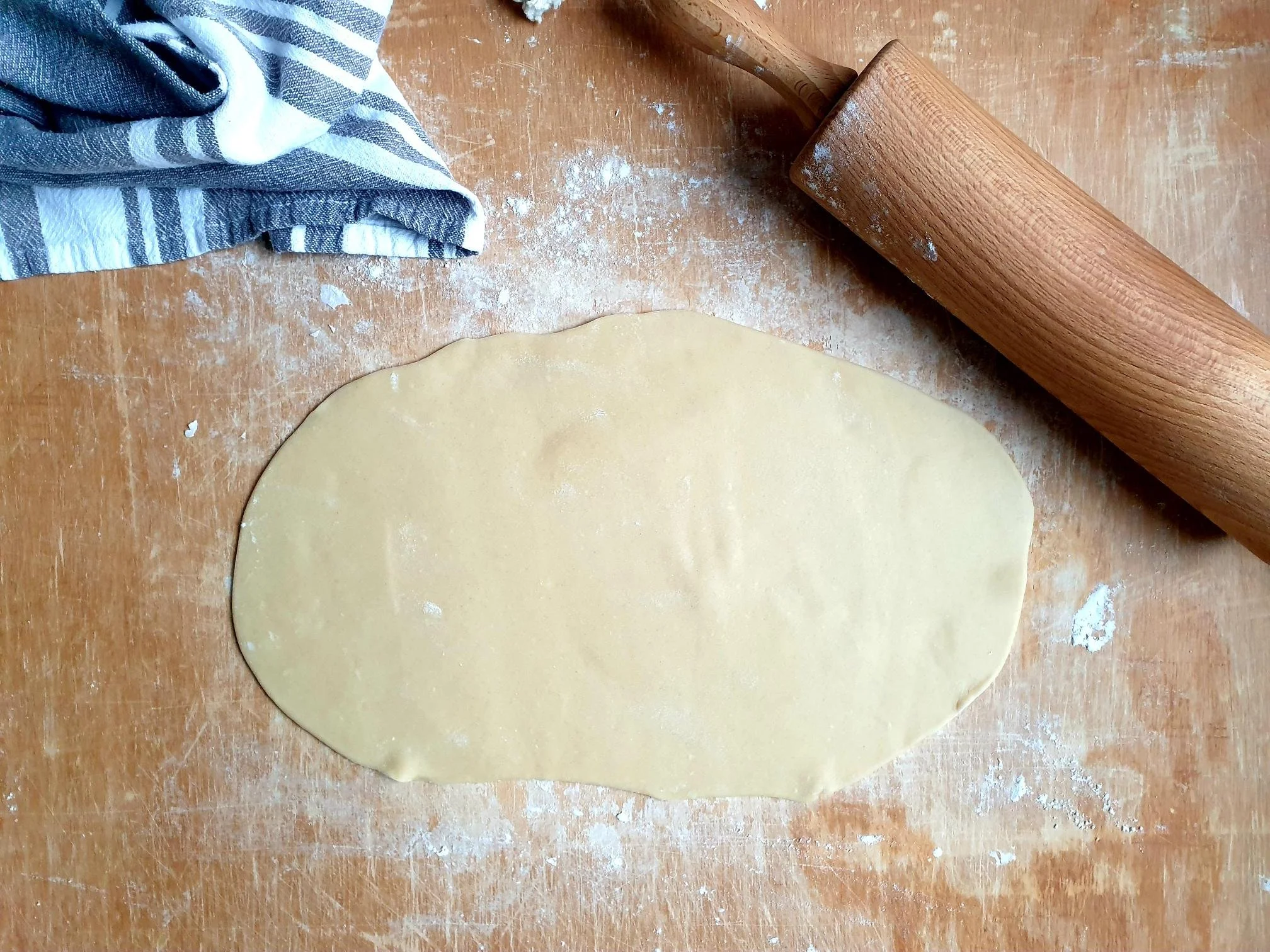
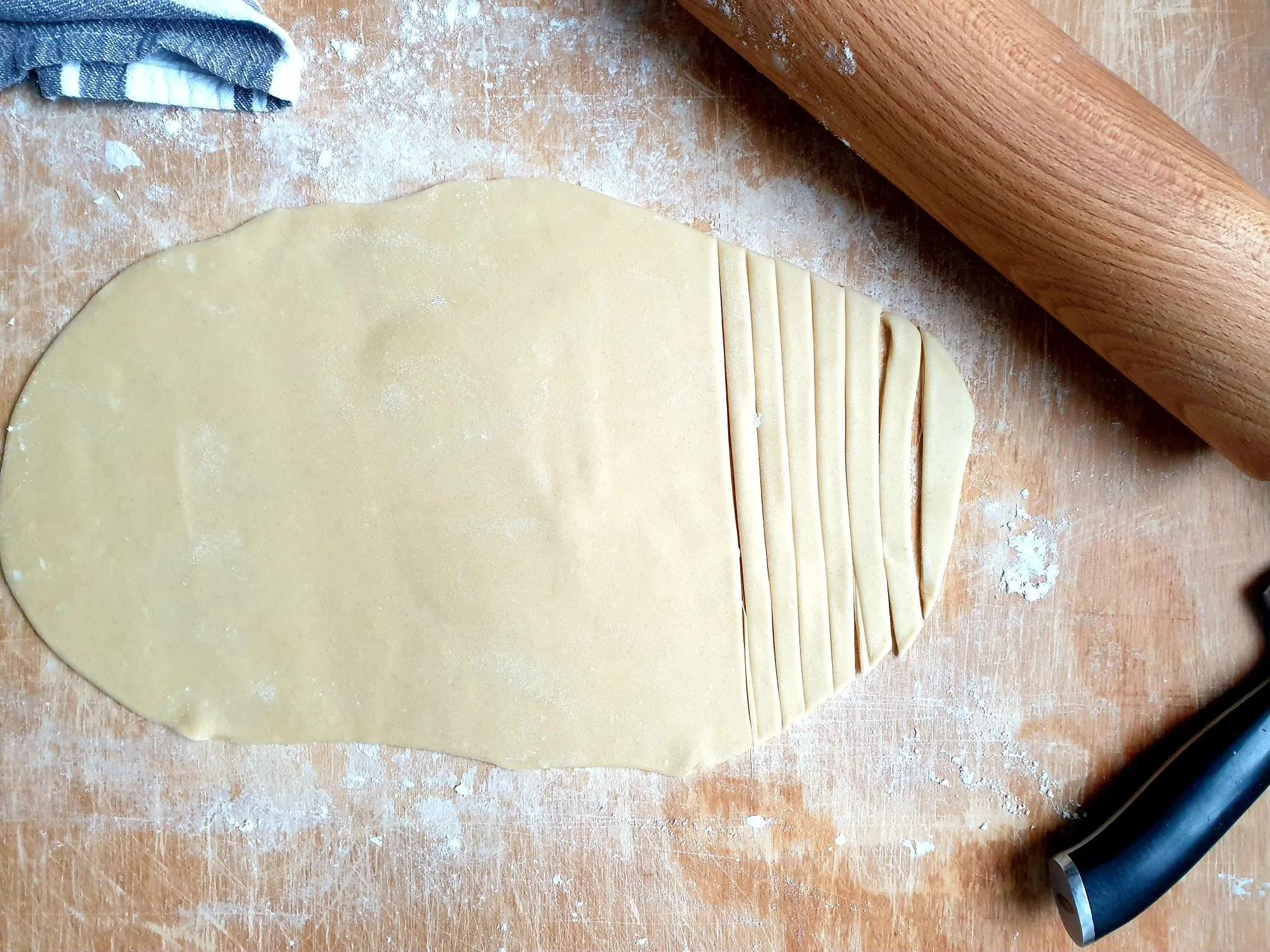
Then cut into strips roughly 1cm (½ inch) wide.
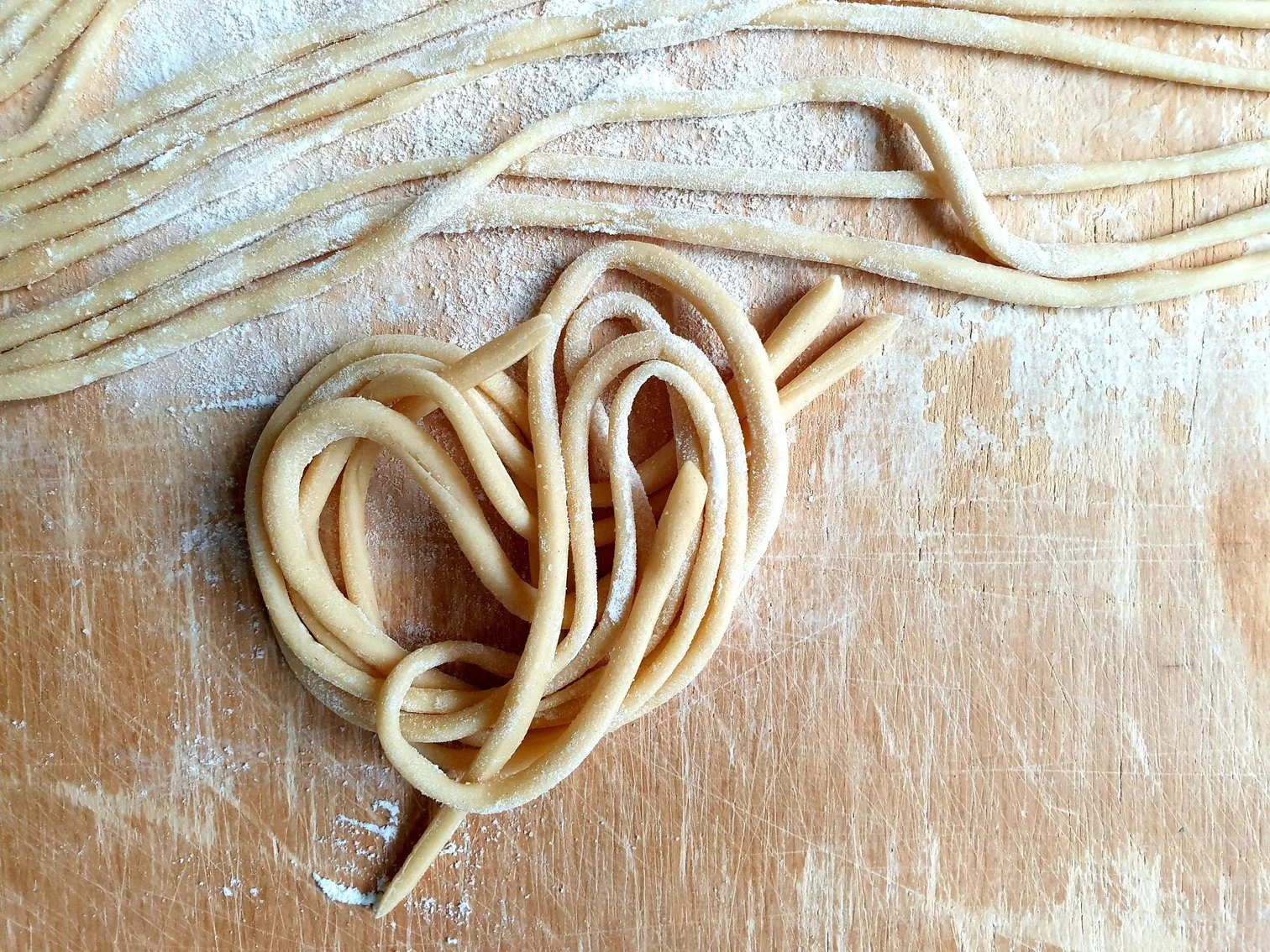
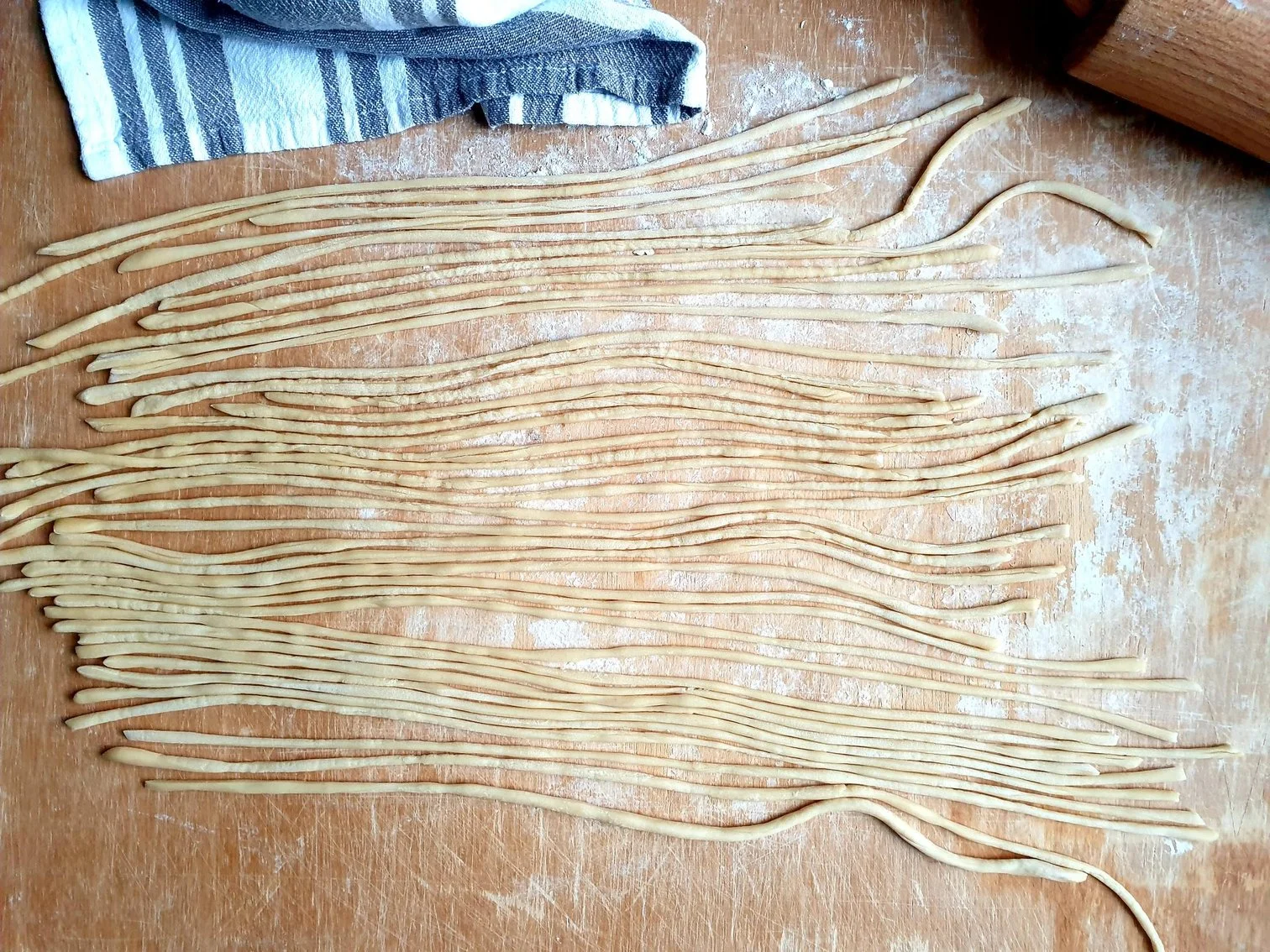
Roll each strip, one by one, between your palms pushing outwards to create long, thick, cylindrical strands (a bit thinner than a pencil) and more or less even throughout the length. They will all be a bit different, so do not stress about it, have fun!
Repeat the process with the other half of the dough.
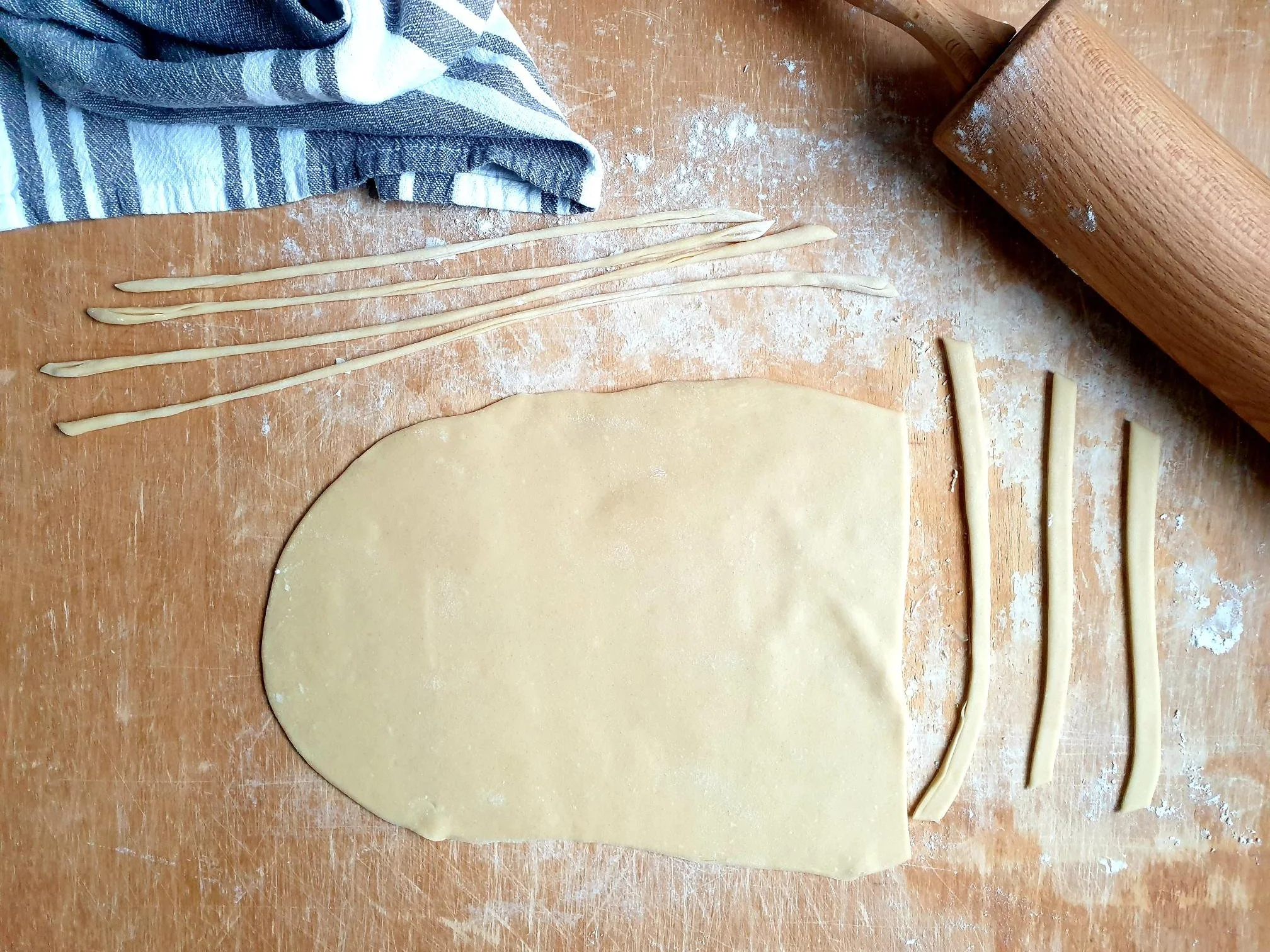
Toss the shaped bigoli in flour to keep them from sticking together.
Keep strands of bigoli separated and arrange them on a flour or semolina-dusted surface, tray or baking sheet to prevent sticking. You can also line a tray or baking sheet with non stick baking parchment.
Cook bigoli pasta in a large pot of boiling salted water for a few minutes.
Cook until tender, but remember that the texture of bigoli is a bit chewy so they won't cook until really soft.
Drain and serve with a sauce of your preference.
I like to transfer cooked bigoli pasta straight into a saucepan with a sauce, add a bit of pasta water and let the bigoli and sauce bubble together for a minute or so. This will allow the pasta to take on the flavour and help thicken the pasta sauce a bit.